Immediate dental implants have become one of the most discussed advances in modern implant dentistry. Replacing a failing tooth with an implant in a single visit is appealing because it reduces surgical stages, preserves soft tissue, and eases the emotional impact of tooth loss.
However, immediate placement is not simply about speed. It is a biologically demanding procedure that requires precise case selection and advanced planning. Recent meta-analyses from 2024 and 2025 show survival rates comparable to delayed placement, at 98.4% versus 98.6%, but with a narrower margin for error. (Alam et al., 2024)
This guide cuts through marketing claims to examine the biology, clinical benchmarks, and digital workflows that truly determine long-term success in immediate dental implant treatment.
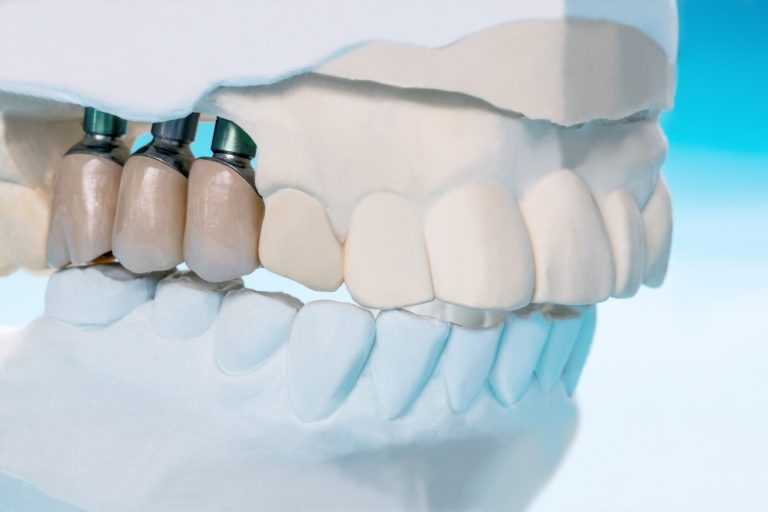
To understand why immediate implants are effective—and where the risks lie—one must first understand what happens when a tooth is removed. The extraction socket is not a static void; it is a dynamic biological environment that undergoes rapid remodeling.
The alveolar bone surrounding a tooth is known as “bundle bone”. It exists solely to support the tooth via the periodontal ligament. Once the tooth is extracted, the bundle bone loses its function and begins to resorb (break down). Research consistently shows that the most significant bone loss occurs on the buccal (lip-side) plate. Without intervention, this wall of bone can collapse, leading to aesthetic defects that are difficult to correct later.
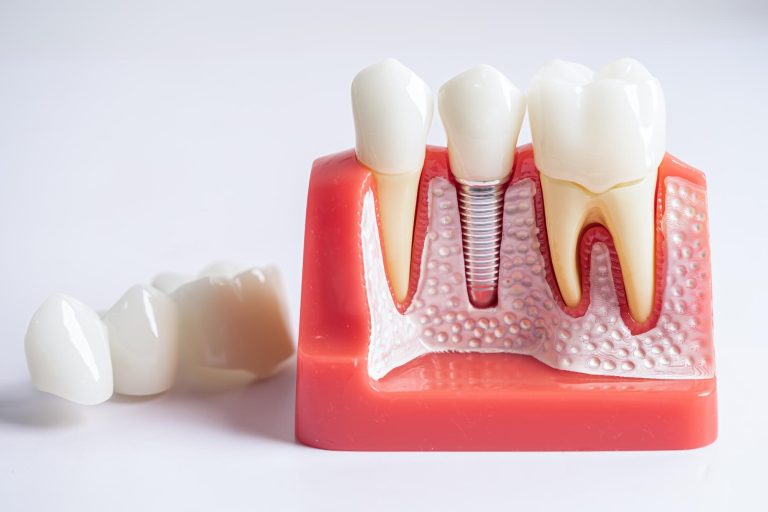
When an implant is placed immediately into an extraction socket, there is inevitably a gap between the implant surface and the socket’s bony walls. This gap is clinically referred to as the “jumping distance”.
Immediate placement attempts to engage the native bone beyond the root apex (the tip of the root) to stabilize the implant while simultaneously managing the jumping distance with grafting materials. This dual approach aims to counteract the natural resorption of the bundle bone.
A successful immediate implant relies on two distinct phases of stability. Understanding the difference is crucial for determining when a patient can receive a temporary crown.
This is the mechanical grip of the implant in the bone at the time of surgery. It is measured using two key metrics:
This occurs as the body heals and new bone cells fuse to the titanium surface (osseointegration).
Between weeks 3 and 4 post-surgery, a critical phenomenon occurs known as the “stability dip”. During this window, the initial mechanical grip (primary stability) decreases as the bone remodels, while biological fusion (secondary stability) has not yet fully matured.
These terms are frequently confused by patients, but they describe two different stages of treatment.
This refers to the surgical placement of a titanium implant into the extraction socket during the same appointment as tooth removal.
This refers to attaching a temporary crown to the implant, usually within 48 hours of placement.
In most immediate protocols, the temporary crown is shaped to look natural but is slightly shortened so it does not contact opposing teeth during biting. This minimizes occlusal forces while guiding gum healing.
Important: Immediate placement does not automatically mean immediate loading. If insertion torque is below 35 Ncm, the implant is typically buried beneath the gum and allowed to heal undisturbed for 3–4 months before restoration.
Success in immediate implantology is 90% diagnosis and 10% surgery. Rather than asking “am I eligible?”, patients should consider their specific risk profile.
Recent large-scale studies have highlighted surprising demographic risk factors:
Historically, the presence of a periapical infection (an abscess at the root tip) was considered an absolute contraindication for immediate implants. The fear was that placing a sterile implant into an infected site would lead to immediate failure.
The current consensus has shifted. Infection is no longer a definitive “no”, provided rigorous decontamination protocols are followed:
The margin for error in immediate placement is measured in millimeters. To mitigate biological risks, modern clinics utilize a fully digital workflow.
Cone Beam Computed Tomography (CBCT) provides a 3D view of the jaw. New AI-driven diagnostic tools can analyze this data to predict bone density values before surgery, offering a “pre-operative forecast” of the likely insertion torque.
These technologies drastically reduce the risk of perforating the buccal plate, ensuring the implant is surrounded by vital bone on all sides.
In scientific literature, “survival” simply means the implant is still in the mouth. “Success” implies stable bone levels and healthy soft tissue.
While survival rates are nearly identical between immediate and delayed approaches, studies on Marginal Bone Loss (MBL) show a nuanced difference. Immediate implants may exhibit slightly higher MBL—averaging 0.82 mm compared to 0.75 mm in delayed sites. While statistically noted, this difference of less than 0.1mm is rarely clinically significant, provided the soft tissue remains stable.
When immediate implants fail, it is rarely due to rejection of the titanium. The primary causes include:
Immediate implants offer a streamlined path to restoration, but they require patience during the healing phase.
Long-term success relies on maintaining peri-implant health. Because immediate implants are often placed in the aesthetic zone, rigorous hygiene and annual professional cleaning are essential to prevent peri-implantitis (inflammation around the implant).
Immediate dental implants represent a remarkable convergence of biology and engineering. While the data confirms their safety and high survival rates (98.4%), they remain a technique-sensitive procedure. Success depends on respecting biological limits, specifically, the bundle bone resorption and the stability dip, and utilizing digital tools to ensure precision.
For the right candidate, immediate placement offers the most efficient route to a restored smile. However, it requires a comprehensive assessment of risk factors, from bone thickness to systemic health. If you are considering this procedure, ensure your provider utilizes the diagnostic and surgical protocols outlined above to safeguard your long-term investment.
Copyright © 2024 Hello Dental Clinic. All Right Reserved.
475, Jalan Sultan Azlan Shah,
Taman Million,
51200 Kuala Lumpur
Mon-Fri: 09:00-19:00
Sat-Sun: 09:00-17:00
V06-02-05, Signature Retail Lot,
Sunway Velocity,
Lingkaran SV, Jalan Shelley,
55100 Cheras KL
Mon-Fri: 09:30-21:00
Sat-Sun: 09:00-18:00
2-02, Level 2, Wisma Conlay,
No.1, Jalan USJ 10/1,
Taipan Business Centre,
47620 Subang Jaya, Selangor
Mon, Tue, Fri: 10:00-18:30
Wed, Thu: 10:00-21:00
Sat, Sun: 09:00-15:30
G-8, Idaman Robertson,
No. 2, Jalan Robertson,
50150, Kuala Lumpur.
Mon, Thur: 11:00-20:00
Tue, Wed, Fri: 09:30-21:00
Sat, Sun: 10:00-19:00
No. 2-2 (Second Floor),
Jalan Solaris 5,
Solaris Mont Kiara,
50480 Kuala Lumpur
Mon-Fri: 10:00-19:00
Sat-Sun: 10:00-18:00