Written by Dr. Lim Wei Gin

Breathing, swallowing, and speaking are things most people do automatically every day. These actions rely on the tongue, lips, and facial muscles working together in balance.
When these muscles develop certain habits, such as mouth breathing or improper tongue posture, they may affect how the teeth and jaws develop over time. This is where orofacial myofunctional therapy may help.
Myofunctional therapy focuses on improving how the muscles of the mouth and face function. By training better tongue posture, breathing patterns, and muscle coordination, it supports healthier oral function and long-term dental stability.
Orofacial myofunctional therapy might sound complicated, but it’s really just helping the muscles in your mouth and face work the way they’re meant to. Think of it as training your muscles, like practicing a skill until it feels natural.
For example, if the tongue usually rests at the bottom of the mouth instead of against the roof of the palate, the muscles get used to that pattern. Over time, it becomes a habit. Myofunctional therapy gives the muscles exercises and guidance to learn a healthier way to sit, swallow, and breathe.
These changes might feel small at first, but over time, they can make a big difference, for your child’s growth, your orthodontic results, and overall oral health.
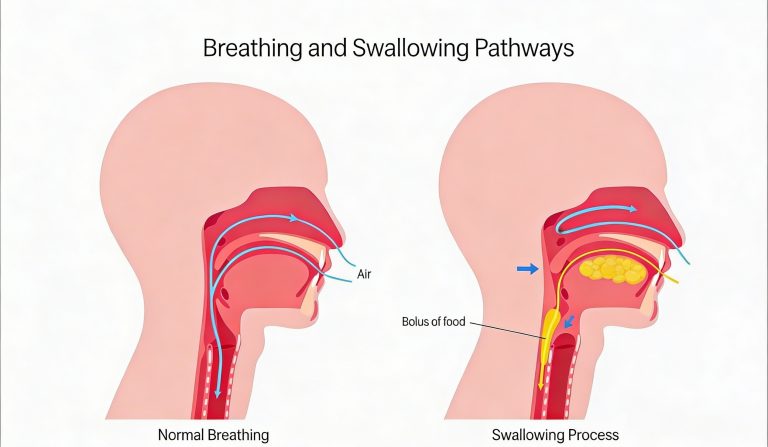
Your oral muscles do much more than help you eat and speak, they actually guide how your face and jaw grow, especially during childhood.
Proper tongue posture means the whole tongue rests gently against the roof of the mouth, not just the tip. When the tongue sits on the palate, it works like a natural expander, helping the upper jaw grow wide enough to make room for all the adult teeth.
A proper lip seal happens when your lips rest naturally closed without any strain. This simple habit encourages nasal breathing instead of mouth breathing. If the lips are often open, it can change how the facial muscles work, affecting jaw development over time.
You can learn more about how this habit affects facial growth in our guide on How Mouth Breathing Affects Children’s Growth and Development.
Your teeth sit in a “neutral zone” between the tongue on the inside and the cheeks and lips on the outside. When this balance is off, like a low tongue and inward-cheek pressure, the teeth can shift, leading to narrow jaws and crowded or crooked teeth.
Sometimes, the muscles in the mouth and face don’t work quite as they should. Dentists call these functional issues Orofacial Myofunctional Disorders (OMDs). Identifying these early can make a big difference in growth, dental alignment, and overall health.
Here are the most common signs that you or your child might benefit from an assessment:
Even small habits like these can affect jaw growth, tooth alignment, and breathing over time.
Recognizing the early signs can help determine when an assessment may be helpful.
The key idea here is simple: form follows function. If the muscles in the mouth and face aren’t working properly, the bones and teeth won’t grow as they should.
Teeth develop in a neutral zone, balanced between the inside pressure from the tongue and outside pressure from lips and cheeks. Imbalances can cause crowding, misalignment, or bite problems.
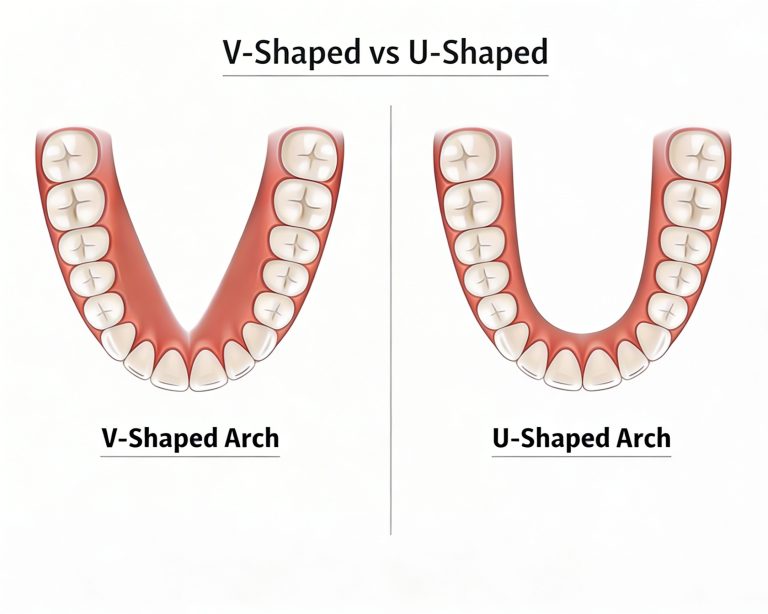
When the tongue rests on the roof of the mouth, it acts like a natural expander, gently pushing the upper jaw to grow wide and U-shaped.
The Problem: Many mouth breathers rest their tongue low. Without that internal support, the upper jaw can become narrow and V-shaped. This leaves less room for teeth, often causing crowding.
The tongue moves every time we swallow—hundreds or even thousands of times each day. If the tongue consistently pushes against the front teeth instead of resting on the roof of the mouth, it can gradually shift their position.
Over time, this can cause the front teeth to protrude or lead to an open bite, where the top and bottom front teeth don’t touch properly. Left unaddressed, tongue thrust can affect not only dental alignment but also chewing efficiency, speech, and overall oral posture.
If the jaw is often open to breathe, the face can grow more downward than forward. This affects the chin profile, dental alignment, and even airway space, contributing to poor breathing and sometimes sleep issues.
A myofunctional therapy session is designed to be gentle, structured, and easy to follow. Each session focuses on retraining oral muscles and improving breathing and posture habits. Here’s what you can expect:
The therapist evaluates tongue posture, lip seal, swallowing patterns, and facial muscle tone. Photos or short videos may be taken to track progress over time.
Sessions include exercises to strengthen and coordinate the tongue, lips, and cheeks. This can involve:
Patients are given short daily exercises to reinforce what was practiced in the session. These are usually simple and take only a few minutes.
The therapist sets goals and milestones, monitors improvements, and adjusts exercises as needed. Regular reassessments help ensure the exercises are effective and progressing appropriately.
If the patient is also receiving orthodontic treatment or working with other specialists, therapy is coordinated to support overall dental, facial, and airway development.
Sessions are designed to be comfortable and encouraging. The focus is on building healthy, lasting habits rather than forcing immediate results.
Early intervention helps guide facial growth, but it is never too late to improve oral muscle function. At Hello Dental, we provide myofunctional therapy for patients of all ages:
Key takeaway: Whether you are 5 or 55, your muscles can learn healthier habits, supporting long-term oral health and comfort.
At Hello Dental, we treat the mouth as part of the whole body. Tongue posture, mouth breathing, and jaw development are connected to posture, airway, and overall wellness.
We focus on root causes first, making sure muscles can function properly before retraining. For children with speech or feeding challenges, we coordinate with Speech-Language and Feeding Therapists to provide comprehensive support.
This approach also helps keep orthodontic results stable, ensuring teeth and jaws stay balanced for long-term health.
Myofunctional therapy focuses on improving tongue posture, breathing habits, and coordination of the oral and facial muscles. These functions play an important role in breathing, swallowing, and overall oral health.
When oral muscles work properly, they help support balanced jaw development and stable dental alignment. Improving these habits may also help reduce issues such as mouth breathing or snoring.
Myofunctional therapy can benefit both children and adults. Early intervention may support healthy facial development in children, while adults can improve long-standing oral habits that affect breathing and comfort.
If you notice signs such as persistent mouth breathing, difficulty keeping the lips closed, tongue thrust swallowing, or frequent snoring, a professional evaluation can help determine whether myofunctional therapy may be appropriate.
Copyright © 2024 Hello Dental Clinic. All Right Reserved.
475, Jalan Sultan Azlan Shah,
Taman Million,
51200 Kuala Lumpur
Mon-Fri: 09:00-19:00
Sat-Sun: 09:00-17:00
V06-02-05, Signature Retail Lot,
Sunway Velocity,
Lingkaran SV, Jalan Shelley,
55100 Cheras KL
Mon-Fri: 09:30-21:00
Sat-Sun: 09:00-18:00
2-02, Level 2, Wisma Conlay,
No.1, Jalan USJ 10/1,
Taipan Business Centre,
47620 Subang Jaya, Selangor
Mon, Tue, Fri: 10:00-18:30
Wed, Thu: 10:00-21:00
Sat, Sun: 09:00-15:30
G-8, Idaman Robertson,
No. 2, Jalan Robertson,
50150, Kuala Lumpur.
Mon, Thur: 11:00-20:00
Tue, Wed, Fri: 09:30-21:00
Sat, Sun: 10:00-19:00
No. 2-2 (Second Floor),
Jalan Solaris 5,
Solaris Mont Kiara,
50480 Kuala Lumpur
Mon-Fri: 10:00-19:00
Sat-Sun: 10:00-18:00