
Written and reviewed by: Dr Sarah Soon (BDS, IMU, more than 6 years of clinical experience)
Last reviewed: [19th Oct 2026].
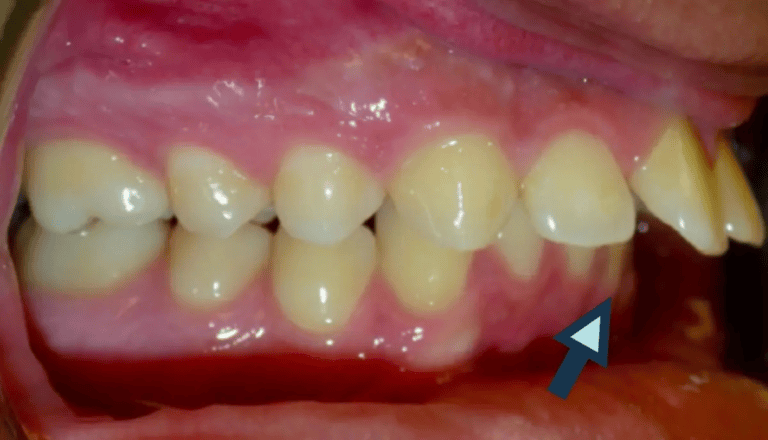
Protruding teeth, sometimes informally called “bunny teeth”, occur when the upper front teeth extend further forward than the lower front teeth. Dentists refer to this as an increased overjet. It can be influenced by genetics, habits such as thumb-sucking or prolonged pacifier use, tongue posture, and mouth breathing. The good news is that protruding teeth can be treated, and early intervention in children may make treatment simpler.
Many people think protruding teeth are purely a cosmetic concern. However, upper front teeth that stick out further are also more vulnerable to injury from falls or accidental impacts. They may also make it harder to close the lips comfortably.
Protruding teeth occur when the upper front teeth extend further forward than the lower teeth. This can be influenced by genetics, oral habits, and breathing or swallowing patterns.
Habits such as thumb-sucking or prolonged pacifier use beyond the age of 3 to 4 can contribute to the upper front teeth moving forward.
Children should have an orthodontic assessment by age 7 so that potential issues can be identified while their jaws are still developing.
Braces are not the only treatment option. Clear aligners, early orthodontic treatment and myofunctional therapy may also help, depending on the child’s age and the underlying cause.
When you bite down, the upper front teeth normally sit slightly ahead of the lower front teeth, leaving a small horizontal gap between them. This distance is known as the overjet. When the gap is larger than normal and the upper front teeth extend noticeably forward, the condition is commonly referred to as protruding front teeth or buck teeth.
However, protruding teeth do not always result from tooth positioning alone. In some cases, the upper jaw may sit too far forward, or the lower jaw may be underdeveloped or positioned further back. This is why dentists assess both the teeth and jaw structure before recommending treatment.
Protruding front teeth usually develop due to a combination of genetic factors and childhood habits that influence jaw development and tooth positioning.
Protruding front teeth may become more noticeable as a child’s permanent front teeth begin to emerge, usually between the ages of 6 and 8.
Early signs parents should look out for include:
When should your child see a dentist?
The American Association of Orthodontists (AAO) recommends that children have their first orthodontic assessment by age 7. This allows potential bite and jaw development problems to be identified while the child is still growing (Harvard School of Dental Medicine).
If you notice any of these signs earlier, there is no need to wait until your child turns 7 before arranging a dental assessment.
Not necessarily. The right treatment depends on the child’s age, the severity of the condition, and whether the underlying cause involves tooth positioning, jaw development or certain oral habits.
Before recommending treatment, the dentist will usually assess the teeth and jaw, which may involve taking photographs, dental X-rays and digital scans to determine the most suitable approach.
For children whose jaws are still developing, treatment may involve upper jaw expanders, clear aligners to help guide the lower jaw forward, and myofunctional exercises to encourage proper tongue posture, lip closure and nasal breathing.
The timing of treatment depends on each child’s growth stage and jaw development. Early intervention may help correct certain alignment and jaw development issues, potentially reducing the need for comprehensive braces treatment later or shortening the treatment period when the child is older.
Metal or ceramic braces use brackets and wires to gradually move teeth into better alignment and correct bite problems. Treatment typically takes around 18 months to 2 years, depending on the complexity of the case.
Clear aligners may be suitable for some cases, ranging from mild to more complex alignment issues. Suitability depends on the position of the teeth, bite condition and the dentist’s assessment.
If protruding front teeth are caused by a significant difference in jaw size or position, braces alone may not be sufficient once the patient has finished growing. In such cases, orthodontic treatment may be combined with corrective jaw surgery (orthognathic surgery) performed by an oral and maxillofacial surgeon. This approach is only recommended for a small number of severe cases.
Protruding front teeth are more than just a cosmetic concern. If left untreated, they may lead to several problems:
Higher risk of dental injuries. Protruding front teeth are more exposed and vulnerable to injury from falls or accidental impacts. A meta-analysis of 54 studies found that an increased overjet was associated with approximately twice the risk of dental trauma. This is particularly relevant for children who participate in sports.
Difficulty closing the lips. In some cases, prominent upper front teeth can make it difficult to close the lips fully at rest. This may be associated with dry mouth and mouth breathing.
Difficulty biting and chewing. The front teeth may not meet properly, making it harder to bite into food.
Speech difficulties. Some people may have difficulty pronouncing certain sounds clearly.
Impact on self-confidence. Children and teenagers may feel self-conscious about smiling or become targets of teasing at school because of their protruding teeth.
Genetic factors cannot be prevented, but many other contributing factors can be managed from an early age.
Limit prolonged pacifier and bottle use. Extended use of pacifiers or bottles may affect bite development. Ask your dentist when it is appropriate to help your child stop these habits.
Help your child stop thumb-sucking. Use praise and rewards rather than scolding. Identify when your child is most likely to suck their thumb, such as before bedtime, and encourage alternative activities. If the habit is difficult to break, a dentist can recommend suitable interventions.
Encourage nasal breathing. If your child frequently breathes through their mouth, snores or has a persistently blocked nose, arrange a medical assessment to identify possible causes, such as allergies or airway problems.
Monitor tongue posture and swallowing. If your child’s tongue frequently pushes forward when swallowing or speaking, myofunctional exercises may help improve oral muscle function.
Look after baby teeth. Tooth decay and premature loss of baby teeth can affect the space available for permanent teeth. Encourage your child to brush twice a day and attend regular dental check-ups.
Arrange an early orthodontic assessment. Have your child’s tooth alignment and bite checked by a dentist before the age of 7.
Use a mouthguard during sports. A mouthguard helps reduce the risk of injuries to the front teeth, particularly in children with protruding teeth.
Note: The final paragraph about composite resin fillings describes treatment for tooth surface notches or abrasion, rather than ways to prevent protruding front teeth. It should be removed from this section and placed in the relevant tooth abrasion content.
| Treatment | Estimated Cost |
| Metal Braces | RM4,000 – RM11,500 |
| Ceramic Braces | RM9,000 – RM12,500 |
| Clear Aligners | RM8,000 – RM22,000 |
Protruding front teeth do not always require immediate treatment. An early assessment can help determine whether treatment is needed or if the condition simply requires monitoring. Our dentists will assess the alignment of the teeth, jaw position and bite before explaining the suitable treatment options.
Book an orthodontic consultation at Hello Dental today.
G-8, Idaman Robertson, No. 2, Jalan Robertson, 50150 Kuala Lumpur
Call: +60 13-391 3343
Email: [email protected]
Mon9:30 am – 8:00 pm
Tue–Fri9:30 am – 9:00 pm
Sat–Sun10:00 am – 7:00 pm
475, Jalan Sultan Azlan Shah, Taman Million, 51200 Kuala Lumpur
Call: +603-8084 3666 / +60 13-998 8806
Email: [email protected]
Mon–Tue9:30 am – 6:30 pm
Wed–Fri9:30 am – 9:00 pm
Sat–Sun9:30 am – 4:30 pm
No. 2-2 (Second Floor), Jalan Solaris 5, Solaris Mont Kiara, 50480 Kuala Lumpur
Call: +60 11-3941 9133
Email: [email protected]
Mon–Fri10:00 am – 7:00 pm
Sat–Sun10:00 am – 6:00 pm
V06-02-05, Signature Retail Lot, Sunway Velocity, Lingkaran SV, Jalan Shelley, 55100 Cheras, Kuala Lumpur
Call: +60 16-828 2373
Email: [email protected]
Mon–Fri9:30 am – 9:00 pm
Sat–Sun9:00 am – 6:00 pm
2-02, Level 2, Wisma Conlay, No. 1, Jalan USJ 10/1, Taipan Business Centre, 47620 Subang Jaya, Selangor
Call: +60 11-6162 6765
Email: [email protected]
Mon–Tue10 am – 1 pm, 2 – 6:30 pm
Wed10 am – 1 pm, 2 – 9 pm
Thu–Fri10 am – 1 pm, 2 – 6:30 pm
Sat–Sun9:00 am – 3:30 pm
F-9-01, Pusat Perdagangan Bandar Bukit Jalil, Persiaran Bukit Jalil 1, 57000 Kuala Lumpur
Call: +60 11-2676 8319
Email: [email protected]
Mon–Fri10:00 am – 7:00 pm
Sat–Sun9:00 am – 6:00 pm
© 2026 Hello Dental Clinic. All rights reserved.